
Supporting Rural Women in Face of the Threat of Climate Change

By
Karema Altai
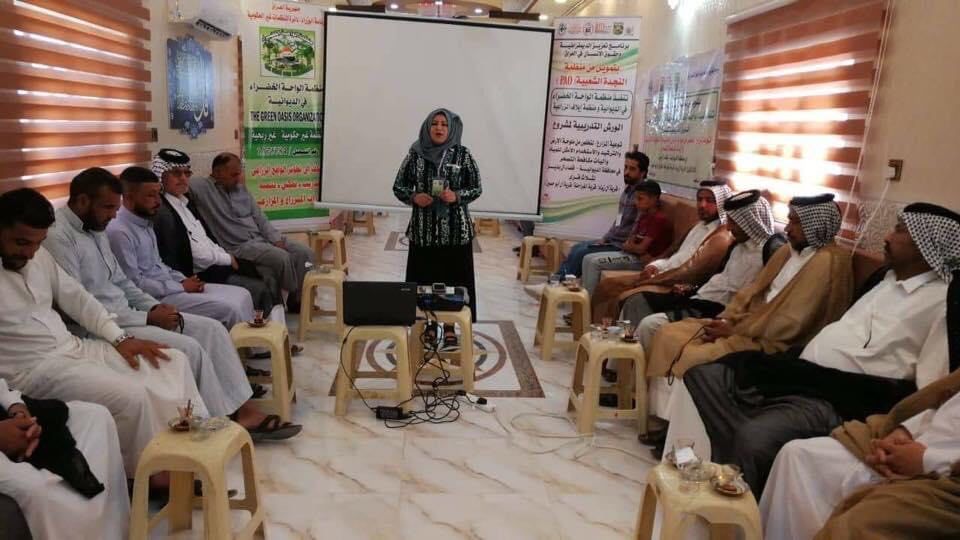
Women in rural areas are either widowed or divorced, or a second wife at beast as a result of climatic changes and water scarcity and their impacts on agricultural areas in Iraq and elsewhere in MENA. Umm Aqil Halima Sawadi, born in 1970, is divorced and has one son and an amputated hand during the Mosul war to liberate the city rom ISIS, Umm Aqil decided to go back to farming. She was aware of climatic changes and water scarcity and their impacts on agricultural areas in her Governorate. She asked her father for a plot of land to devote it for agriculture. She wants to be financially independent and be able to spend on her only son. She began to plant some vegetables in that plot of land. Fortunately, the civil society organizations helped her to navigate obstacles with local authorities. As a result, the local government provided Umm Aqil with plastic houses that they installed in the ground. As for watering, Umm Aqil, used drip irrigation to avoid wasting scarce water. Umm Aqil was able to grow vegetables and used learnt by searching the Internet how to use the organic fertilizers.  She said, “I learned how to use the Internet and learned how to make fertilizers”. She uses organic fertilizers on all types of planting, knowing that she is only completed a third level primary school. In addition, she grows perennial green trees on the sides of the agricultural fields to block sever dust storms. Thus, sustainable food and positive savings for the goal (13) were achieved by climatic assessments. As for the mother of Anwar Nidal Dabush, born in 1984, her husband was wounded in the war and could not farm, so she took the initiative and began to plant agricultural land that she rents from charitable people. She grows various types of vegetables in it. Anwar’s son, dropped from the school in order to assist his mother. At the harvesting season, she rents a car and puts the product in the car and goes to the place of vegetable wholesale market (Al-Alwa). As for the water, there is a river nearby, and the local government enforces water rationing system. She has been planting perennial evergreen trees and shrubs which need less water in summer. Anwar Nidal Dabush recognizes that planting trees reverses desertification by preventing soil erosion of the available agricultural lands, softening the atmosphere from the heat, that is, making it a clean environment and thus achieving the goal (13) and climatic changes and goal (10) and achieving sustainable food.
Dreams of Primary School  Teacher

By
Sura Majed
Ahlam is an elementary teacher in one of the schools in Al-Diwaniyah city. She observes how students were not paying attention to keep their learning environment and schools clean, nor they seem to care about preserving the cleanliness of the environment. Based on Ahlam’s observation, future generations must be brought up in a conscious manner, she decided to
teach children the importance of keeping the environment clean in her own way.
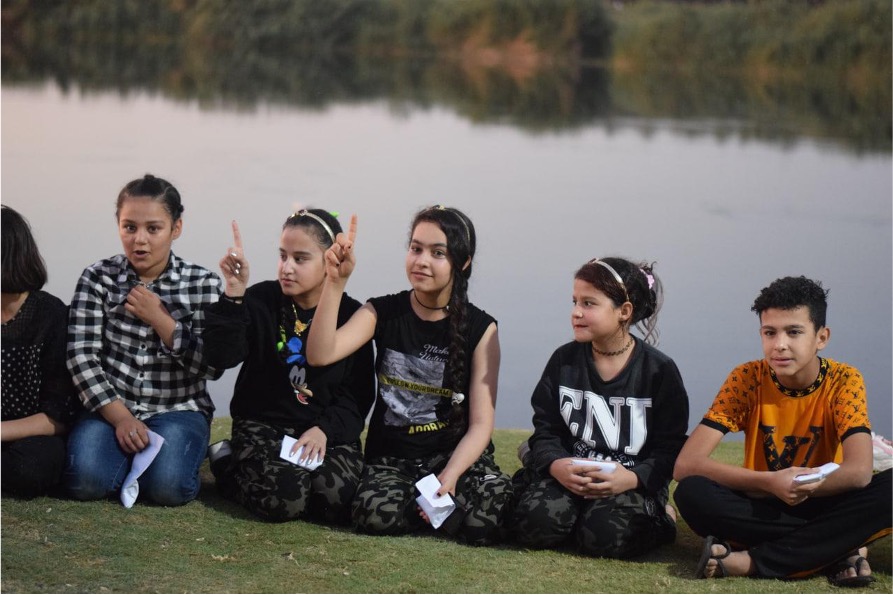
One day, she decided to take the children to the garden next to the school, and this garden was dirty and unhygienic. The garden does not have a special concierge to keep it clean, but sometimes people from the neighborhood volunteered to clean it. One day, the Ahlam brought meals with her and distributed to the students, then they went out to the garden, and took them to the dirtiest place in the garden and ordered them to eat their food there. Students were shocked and unhappy. They resented the place and declined to eat the food. The teacher asked them to put the meals aside.  She asked them to start cleaning the place and promised them to reveal a secret for them. Indeed, all students rushed to clean the garden by removing the dirt and rubbles. Upon completing their task, she told them that the is to follow the teachings of Islam. As Islam urges its followers that “cleanliness is from belief”, and that Prophet Mohammad reminds Muslims “removing harm from the road is charity” and charity has a great reward in the world. The teacher told them that they are the future generations on whom we depend on to build a better future, that they are good kids, and they will protect the environment and abide by the instructions, the students promised the teacher that they will always clean the garden, they will never throw rubbish on the ground, so the teacher told them that only now they can eat in a clean place with peace of mind.
Story of Hit in Ramadi Governorate

By
Raifat Alhiti
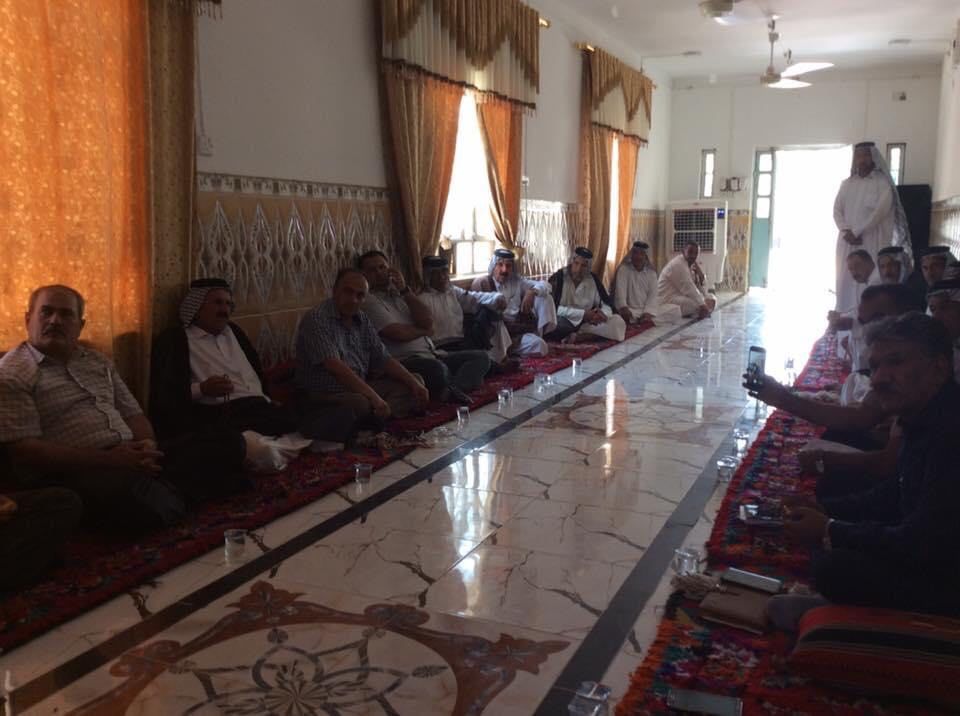
From the earth that comes out of its bellies, materials that make history and civilizations are heated. The same city that the world philosopher called (Madani Saleh Al-Hiti, the virtuous city). The city of Hit is considered one of the oldest cities. The world, which previously boasted of its castle, which contains four gates from all directions and sits above the course of the Euphrates River. Today, it suffers from great neglect in the demolition and fall of most of the castle’s houses, and its river suffers from encroachments on it and the throwing of waste and waste. Plastic, building rubble and death water (sewage water) and lime spring water whose water has been pouring for thousands of years without treating sewage waters that contain heavy water, and bulldozing the orchards surrounding the city in order to expand the construction and reconstruction area on calculating the green spaces that were decorating the city and considered a source of air purification, so the atmosphere in the city of Hit in the years
The past in the summer is somewhat mild due to the peculiarity of the city, that it is in a low ground and surrounded by orchards and the river, but today doesn’t not look like yesterday.

 International Journalists Coalition